Pig vets - this one is for you!
2026-10-15(And you too, mixed practice vets - just noticed that pig-home-visit on your schedule? We've got you!)
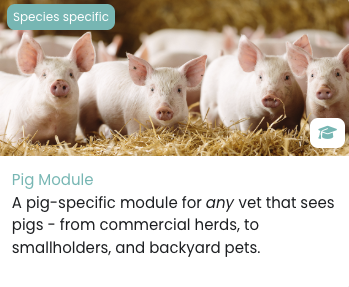
This October we’re adding to our digital library with the release of a new online learning program for Australia’s pig veterinarians. Funded by Australian peak body, Australian Pork Limited (APL), this module genuinely has something for any vet that sees pigs.
For early career vets we’ve got coverage of the basics from approach to disease investigation and knowing what’s ‘normal’ pig behaviour, through to simple sedation protocols. For the more seasoned players, we have a great section on optimising in-water antimicrobial dosing events and interpreting AMS surveillance reports. The chapters reviewing nutritional interventions, regulatory and Quality Assurance (QA) components of on-farm antimicrobial use, and basic pharmacology are relevant to all. There’s also the opportunity for veterinarians to learn how colleagues approach certain disease presentations and biosecurity challenges through some short video interviews.
We were lucky enough to work with some wonderful subject matter experts and leverage their practical experience, helping us to deliver high-quality and practical content. It’s our goal that all vets who see pigs in Australia get access to this course.
Access the new module here: www.vetams.org
Video playback works best through chrome or edge. Sign-up is free and the program can be accessed anytime. There are 2 CPD points and a certificate of completion available once the post-module quiz has been passed.
Content
- A – Introduction and overview
- B – Physical examination in pigs – Individual vs herd approach
- C – Maximising diagnostic reliability in pigs
- D – Basic pharmacology of antimicrobials used in pigs
- E – Antimicrobial use on farm – Veterinary Responsibilities in prescribing, documenting, and disposal
- F – Refining in-feed and in-water antimicrobial use
- G – Interpreting AMS surveillance reports
- H – Preventative measures to support reduction in antimicrobial use
- I – Role of nutrition in disease prevention
Development of the program was in-line with stakeholder feedback and industry-group interest. It’s the third species-specific program we’ve developed, following on from our foundational course and poultry and equine-specific programs. Though designed specifically for the Australian context, much of the content is applicable in international settings. As with other online learning resources developed by the AMR Vet Collective, global reach of this new program is expected.
Access the AMR Vet Collective website, including all existing AVA and AMA veterinary prescribing guidelines here: https://www.amrvetcollective.com/home/guidelines/
The AMR Vet Collective also maintains a social media presence and posts regularly including a focus on AMR Awareness Week each year across Facebook, LinkedIn, and Instagram.